Journal
Inside the factory: why one roof beats five subcontractors
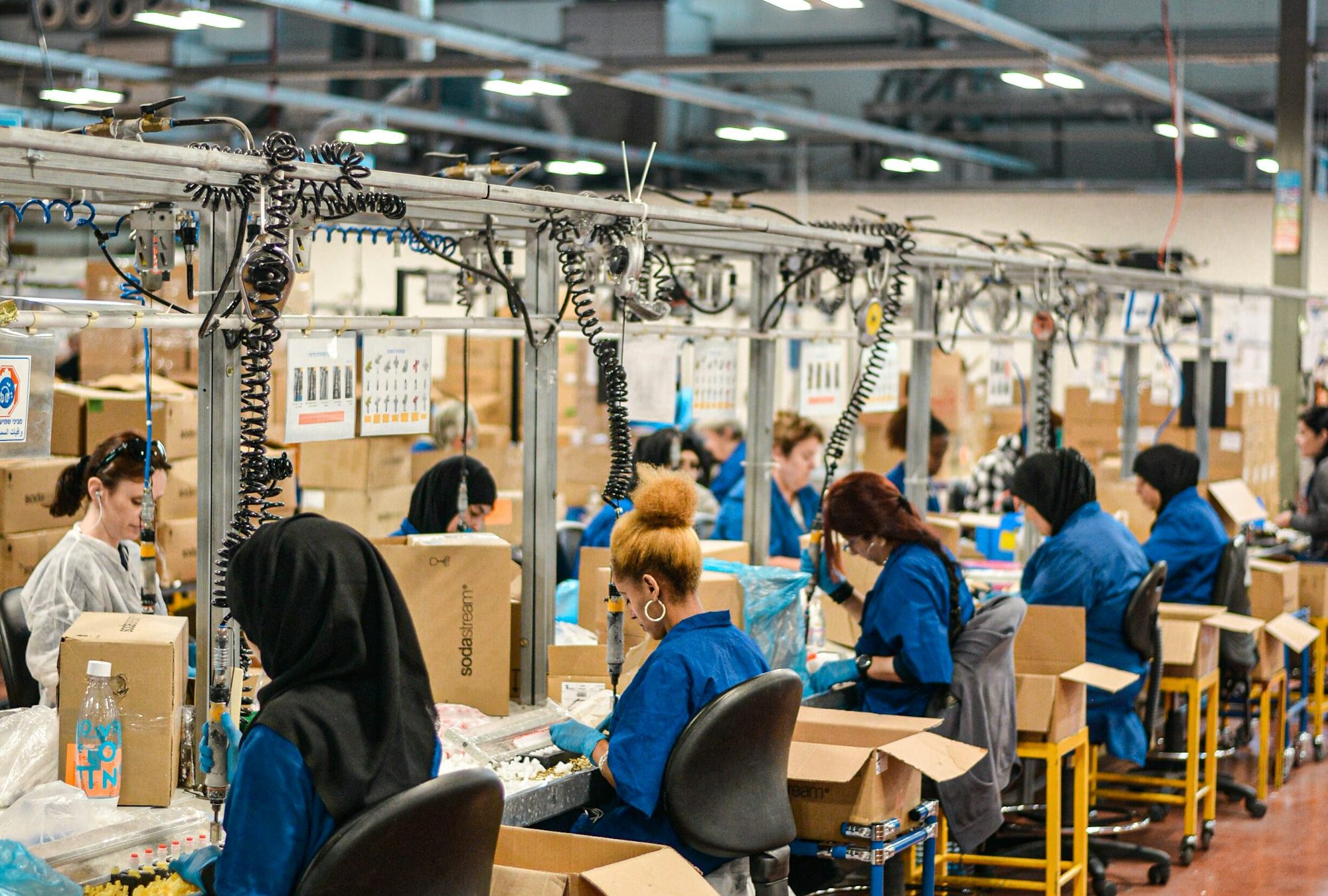
Most custom FF&E is not made by a factory; it is assembled by a broker across five subcontractors — a joinery here, a metal shop there, a finisher across town, an upholsterer running behind schedule, a stone yard nobody from the project team has ever visited. Each is individually competent. Projects still fail, because projects fail at interfaces, and subcontracting multiplies interfaces. We run wood, metal, paint, upholstery, stone and glass, and final assembly under one roof. Here is what that actually changes.
The hidden cost of five subcontractors
Colour and finish consistency. On a hotel room, the walnut veneer, the brass trim and the lacquered panel must agree with each other under the same lighting. When three separate shops each match to a posted sample, you get three interpretations — and the argument about whose sample was right happens on your site, at your opening date. Under one roof, the signed control sample lives on the wall of every workshop, and the finishing line signs off cross-material matches before anything is packed.
Tolerance stack-up. A metal frame built to ±2 mm meeting a stone top cut to ±1 mm meeting joinery at ±1.5 mm is a visible gap. No single subcontractor caused it; each was within their own tolerance. Integrated production holds one tolerance standard across materials, and critical assemblies are dry-fitted on the factory floor, where a mismatch costs an afternoon, instead of on site, where it costs a month.
Time and accountability. Every handover between subcontractors costs a shipping leg, a receiving inspection and a place in someone else’s queue — typically two to four weeks across a multi-process piece, before counting rework. And when something goes wrong, each vendor’s defect is another vendor’s fault; the client becomes the referee between companies they never contracted. One roof means one schedule, one QC standard, and exactly one phone call when anything deviates.
Stacked margins. Each subcontractor prices in their own overhead and profit, and the broker adds coordination on top. Across a multi-process product, stacked margins commonly add 20 to 30 percent to the ex-works price. Integrated manufacturing prices the value chain once.
What one roof looks like in practice
Our floor runs six workshops — wood, metal fabrication, paint and finishing, upholstery, stone and glass, and final assembly with QC — with about 85 percent of processes in-house. A lobby installation moves from metal to finishing to trial assembly without leaving the building; a guestroom casegood line runs in parallel on the same quality system. Mockups move at workshop speed: when a designer wants a corner detail changed, the revised sample is on a video call within days, not in a container in six weeks. Communication compresses the same way: the person who quotes the job sits a staircase away from the person who builds it, so a question raised on Monday morning is answered by the machines, in material, by Friday. Before anything ships, every piece passes a full pre-install inspection — assembled, measured and photographed — then goes into numbered, modular crating matched to the installation manual.
The model also changes what a warranty means. A broker’s warranty is a forwarding address; a factory’s warranty is a tooling record. Because construction details, finish recipes and CNC programs live in our archive, a damaged panel or a worn chair from a project delivered years ago can be remanufactured to the original standard — the difference between a repair and a replacement, at portfolio scale, is a line owners’ asset managers notice.
To be fair, specialist processes can still justify outside partners; the discipline is to outsource only what someone else demonstrably does better, and to manage that interface as the manufacturer of record so the client never has to. Five subcontractors can build a product. Only one roof can guarantee it — and in a contract project, the guarantee is the product.